 Posted on May 14, 2025 by Admin.
The financial landscape of 2025 presents a complex picture. Persistent inflation concerns continue to pressure household budgets, while market volatility keeps investors on edge.
Introduction: Why Financial Literacy Through Books Maers More Than Ever in 2025
The financial landscape of 2025 presents a complex picture. Persistent inflation concerns continue to pressure household budgets, while market volatility keeps investors on edge. The rapid advancement of Articial Intelligence (AI) is reshaping industries, impacting both job security and investment opportunities. Furthermore, fundamental notions about work, career paths, and retirement are evolving, demanding new strategies for long-term financial security. Navigating this environment successfully requires more than just glancing at headlines; it demands a deeper understanding of financial principles and strategic thinking.
Compounding this challenge is the sheer volume of financial information available. Advice oods in from countless online sources, social media inuencers, and dedicated apps. Discerning credible, eective strategies from the noise, misinformation, or potentially harmful "get rich quick" schemes becomes increasingly dicult. The "narrative culture," oen amplied by social media, can signicantly shape perceptions of the economy and markets, sometimes diverging from underlying realities.
This digital age paradoxically elevates the value of well-curated knowledge sources like books. While online content is abundant, reputable books typically undergo rigorous editing and fact-checking, oering structured, in-depth explorations of financial topics. They provide a necessary lter, presenting veed principles and timeless strategies that cut through the ephemeral nature of online chaer. In an era demanding reliable guidance, carefully selected finance books serve as invaluable resources for building both foundational understanding and actionable plans.
This article presents a curated list of the top 10 finance books essential for reading in 2025. The selection blends foundational classics that have stood the test of time with impacul recent releases addressing contemporary challenges. These books were chosen based on their relevance to the current economic climate, practical applicability, clarity, author credibility, and the breadth of topics covered – encompassing personal finance, investing, economic principles, behavioral finance, and financial strategy. The goal is to empower readers with the knowledge needed to condently level up their financial skills and navigate the complexities of 2025 and beyond. A recurring theme observed across many recommendations is a tension between the enduring principles of discipline, patience, and long-term perspective found in classic texts and the excitement surrounding newer, oen more volatile, investment approaches or the desire for rapid gains frequently highlighted in modern discourse. This list deliberately leans towards works that provide a strong grounding in fundamental principles, recognizing their crucial role in building lasting financial well-being amidst eeting trends. The keywords integrated throughout, such as "best finance books 2025," "improve financial knowledge," "financial literacy," and "investing skills," aim to help those actively seeking this knowledge nd this resource.
Top 10 Finance Books for 2025: At a Glance
To provide a quick overview, the table below summarizes the key details of the selected books:
| Book Title | Author(s) | Primary Focus | Target Audience | Key Relevance for 2025 |
| The Intelligent Investor | Benjamin Graham (Commentary: Jason Zweig) | Value Investing Principles, Risk Management | All Investors (Beginner to Experienced) | Provides rational anchor & risk framework for volatile markets; timeless principles updated for modern context. |
| The Psychology of Money | Morgan Housel | Behavioral Finance, Money Mindset | Universal (Anyone interacting with money) | Crucial for behavioral discipline amidst information overload & market volatility; understanding biases. |
| Rich Dad Poor Dad | Robert Kiyosaki | Financial Literacy, Asset Acquisition Mindset | Beginners, Aspiring Entrepreneurs/I nvestors | Emphasizes financial education & asset focus relevant to evolving economy & income streams |
| The Lile Book of Common Sense Investing | John C. Bogle | Low-Cost Index Fund Investing, Passive Strategy | All Investors (Especially Beginners) | Simple, proven, low-cost strategy; vital for cost control in uncertain/inati onary environments. |
| A Random Walk Down Wall Street | Burton G. Malkiel | Comprehensive Investing Guide, Market Theory | Beginner to Intermediate Investors | Historical context & rational framework for evaluating traditional & new assets (crypto, NFTs). |
| The Total Money Makeover | Dave Ramsey | Debt Elimination, Financial Fitness Plan | Individuals/Famil ies in Debt | Proven behavioral plan for tackling debt; updated for modern financial products (BNPL). |
| Your Money or Your Life | Vicki Robin & Joe Dominguez | Financial Independence (FIRE), Value Alignment | FIRE Seekers, Those Questioning Consumerism | Framework for aligning spending with life energy/values; resonates with work-life balance & conscious consumption. |
| Thinking, Fast and Slow | Daniel Kahneman | Cognitive Biases, Decision-Makin g Psychology | Investors, Professionals, Anyone Seeking Beer Judgment | Foundational understanding of why behavioral finance maers; recognizing biases to improve financial decisions. |
| The Algebra of Wealth | Sco Galloway | Modern Wealth Formula (Career, Habits, Investing) | Young Adults, Early-Career Professionals | Addresses current economic challenges (ination, housing); holistic approach linking career & finance. |
| Financial Literacy for All | John Hope Bryant | Financial Empowerment, Economic Justice | Universal (Especially Underserved Communities, Educators, Beginners, Policymakers) | Context on systemic inequality; practical literacy & vision for economic inclusion & empowerment. |
The Top 10 Finance Reads to Level Up Your Skills in 2025
Below are detailed summaries of each recommended book, exploring their core concepts, intended audience, and specic relevance for navigating the financial landscape of 2025. The consistent recommendation of many of these titles across diverse sources – frm financial news outlets and expert blogs to investment communities and major retailers – underscores their foundational importance and enduring value.
1. The Intelligent Investor by Benjamin Graham (with commentary by Jason Zweig)
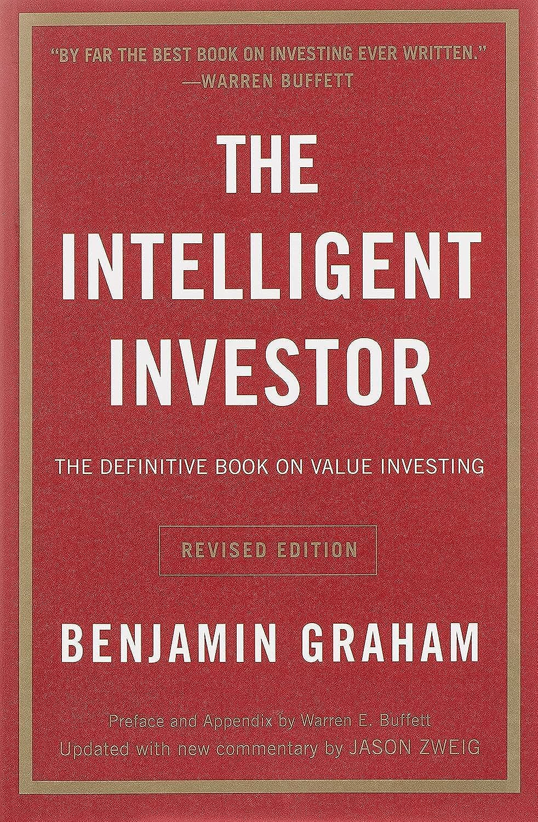
Snapshot: Widely regarded as the denitive bible of value investing, this 1949 classic oers timeless principles for long-term investment success and disciplined risk management. Warren Bue famously called it "by far the best book about investing ever written".
Core Concepts & Key Takeaways: Graham introduces the philosophy of "value investing," which involves purchasing securities when their market price is signicantly below their calculated intrinsic value. Central to this is the "margin of safety" principle – ensuring a buer between the purchase price and the estimated value to protect against errors and unforeseen events. He encourages readers to view stocks as ownership stakes in actual businesses, not merely as uctuating ticker symbols, and to adopt a long-term, business-like perspective. The famous "Mr. Market" allegory personies the stock market's oen irrational mood swings, teaching investors to exploit its pessimism and ignore its euphoria rather than be swayed by them. Graham rigorously distinguishes between "investment," which is based on thorough analysis and promises safety of principal and an adequate return, and "speculation," which relies on predicting market movements. Emotional discipline is paramount. The updated editions feature insighul commentary by financial journalist Jason Zweig, who bridges Graham's original text with modern market examples and context, ensuring continued relevance.
Who Should Read This: This book is essential reading for anyone serious about investing. Beginners will nd a robust foundation for sound practice, while seasoned investors benet frm a powerful reminder of core principles. Its inuence is undeniable, shaping generations of successful investors.
Why It's Essential for 2025: In today's markets, oen characterized by rapid uctuations, speculative fervor, and narratives amplied by social media , Graham's emphasis on rationality, objective analysis, and risk management provides a vital anchor. The "margin of safety" concept is particularly crucial when facing economic uncertainty or potential market downturns. The focus on long-term value and emotional control helps investors avoid costly behavioral mistakes driven by fear or greed in volatile times. Zweig's commentary ensures Graham's wisdom is applicable even amidst contemporary market complexities. The remarkable endurance of this nearly 75-year-old book underscores a fundamental truth: while market mechanisms evolve dramatically, the core human psychology driving investment behavior – fear, greed, the herd instinct – remains constant. Its continued high regard demonstrates that mastering these timeless behavioral and analytical principles is perpetually relevant, oen more critical than chasing the latest, potentially eeting, market trend.
2. https://www.amazon.com/Psychology-Money-Timeless-lessons-happiness/dp/0857197681
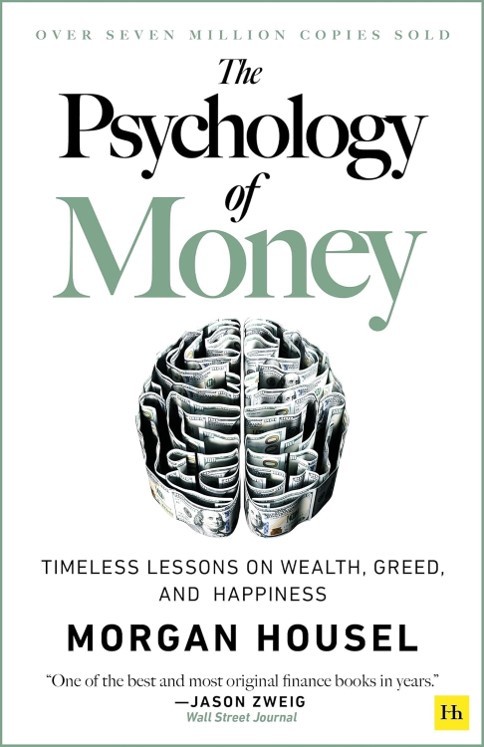
Snapshot: A global bestseller (published 2020, over 8 million copies sold 13 ) that masterfully explores the critical role of behavior, biases, and individual psychology in achieving financial success, using 19 engaging short stories.
Core Concepts & Key Takeaways: Housel argues compellingly that financial success is less about what you know and more about how you behave – it's a "so skill," not a hard science. The book delves into understanding one's personal history and relationship with money, greed, and happiness. It highlights the oen-underestimated roles of luck and risk in financial outcomes and encourages focusing on broad paerns rather than specic, potentially unrepeatable, case studies. Housel distinguishes between being "rich" (visible spending) and being "wealthy" (assets not spent, providing freedom and options). He emphasizes the extraordinary power of compounding and the necessity of patience, suggesting the most potent investment advice could be summarized as "Shut Up and Wait". Other key takeaways include avoiding the trap of constantly moving the financial goalposts and recognizing that having a sense of control over one's life is a strong predictor of well-being.
Who Should Read This:This book oers universal insights and is essential reading for everyone, frm financial novices to experienced professionals.It's particularly benecial for those who recognize they struggle with emotional decision-making or psychological biases related to money. Its accessible storytelling format makes complex ideas easy to grasp.
Why It's Essential for 2025: : In an era marked by information overload, market volatility, and the constant pressure of social comparison amplied online, understanding and managing one's own psychological tendencies is more critical than ever.Housel provides the mental models and awareness needed to develop behavioral discipline, stick to long-term financial plans, resist herd mentality, and make wiser decisions under pressure. The phenomenal success of this book signals a broader recognition within personal finance: achieving good outcomes depends as much on mastering our own psychology as it does on mastering spreadsheets or market analysis. Traditional finance oen prioritized quantitative models, but Housel's widespread appeal demonstrates a growing understanding that the 'so skills'– managing fear and greed, maintaining perspective, understanding biases – are oen the dierentiating factors in long-term financial well-being.
3. Rich Dad Poor Dad by Robert Kiyosaki
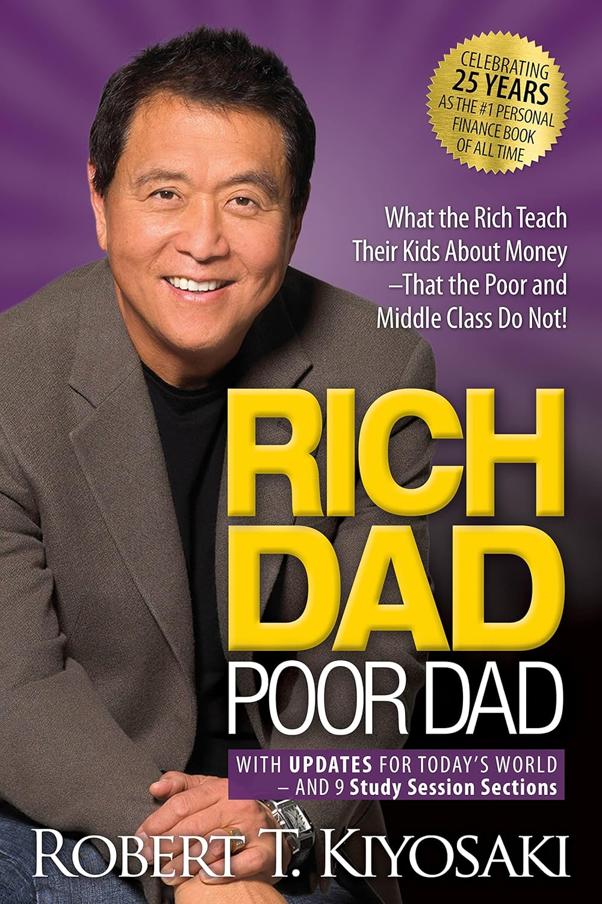
Snapshot: A massively inuential personal finance classic, rst published in 1997, that challenges conventional wisdom about money, work, and wealth creation by advocating for financial education and prioritizing asset acquisition.
Core Concepts & Key Takeaways: The book contrasts the financial philosophies of Kiyosaki's highly educated but financially struggling biological father ("Poor Dad") and his friend's entrepreneurial father ("Rich Dad"). The core message revolves around the importance of financial literacy – understanding how money works, rather than just working for money. A key distinction is made between assets (things that generate income, like businesses, real estate, stocks) and liabilities (things that cost money, like mortgages on personal residences, car loans). 10 Kiyosaki urges readers to focus their eorts on acquiring and building income-producing assets to achieve financial freedom. He also discusses leveraging debt strategically ("good debt") to acquire assets, as opposed to accumulating "bad debt" for consumption. 23 The book champions an entrepreneurial mindset and continuous learning about finance and investing.
Who Should Read This: Ideal for beginners seeking a fundamental shi in their money mindset, individuals aspiring to entrepreneurship or investing, and anyone feeling trapped in the traditional employee "rat race". It's worth noting that while highly inuential, some of Kiyosaki's advice and narratives have faced scrutiny and criticism.
Why It's Essential for 2025: The central themes of prioritizing financial education and building diverse income streams through asset acquisition remain highly relevant as traditional career paths continue to evolve and the "gig economy" expands. 5 It encourages a proactive approach to wealth creation, which is a valuable perspective in an uncertain economic climate. The book's persistent popularity 10 , despite acknowledged criticisms 24 , highlights a fundamental divergence in personal finance philosophies. Kiyosaki represents a more active, entrepreneurial path, oen involving real estate and business building, which contrasts with the more passive, conservative strategies advocated by gures like John Bogle. 29 Including it acknowledges its signicant impact while placing it within this broader spectrum, allowing readers to understand dierent schools of thought on wealth creation.
4. The Lile Book of Common Sense Investing by John C. Bogle
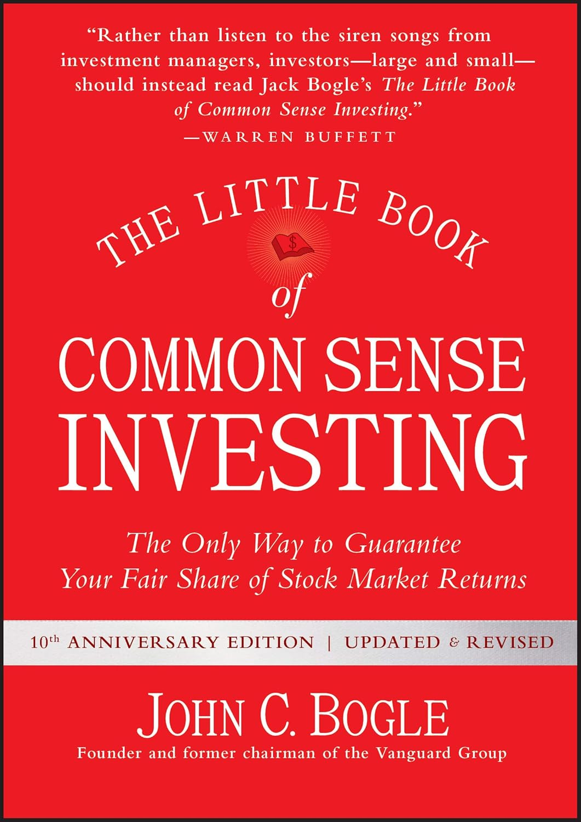
Snapshot: A concise and powerful argument for low-cost, passive index fund investing, penned by the legendary founder of The Vanguard Group and pioneer of the index fund.
Core Concepts & Key Takeaways: Bogle's central thesis is the "Cost Maers Hypothesis": minimizing investment costs – including expense ratios, brokerage commissions, and taxes – is the most crucial factor in maximizing long-term returns for the average investor. He argues convincingly that aempting to consistently outperfrm the market through active management or market timing is a losing game for most. Instead, he advocates for simply buying and holding a broadly diversied porolio that mirrors the entire stock market, achievable through low-cost index funds. The book explains the powerful eect of compounding returns over long periods and emphasizes the importance of diversication and maintaining a disciplined, buy-and-hold strategy, ignoring short-term market noise.
Who Should Read This: This book is essential for all investors, but particularly valuable for beginners seeking a simple, eective, evidence-based, and low-maintenance strategy for building wealth over the long term. Warren Bue has endorsed Bogle's signicant contributions to investors. The thriving "Bogleheads" online community aests to the enduring appeal and practicality of his philosophy.
Why It's Essential for 2025: In a financial world lled with complex products and active strategies promising market-beating returns (oen accompanied by high fees), Bogle's message oers profound clarity and a powerful, statistically supported alternative. The discipline of controlling costs becomes even more critical in environments potentially facing lower average returns or higher ination. It provides a straighorward, resilient approach that helps investors avoid the common pialls of chasing performance or over-complicating their porolios.
5. A Random Walk Down Wall Street by Burton G. Malkiel
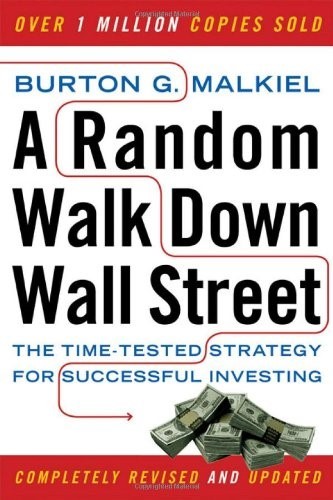
Snapshot: A time-tested and comprehensive guide to the world of investing, rst published in 1973 and regularly updated, covering various investment strategies, asset classes, and the inuential ecient market hypothesis.
Core Concepts & Key Takeaways: The book popularizes the "random walk" theory, which posits that short-term stock price movements are unpredictable and that past performance is not indicative of future results, making consistent market outperfrmance through technical or fundamental analysis dicult. Malkiel strongly advocates for diversication across various asset classes (stocks, bonds, real estate, etc.) to manage risk. He provides practical guidance on constructing a porolio tailored to dierent life stages and risk tolerances. The book oers accessible explanations of dierent investment vehicles and critiques common strategies used to try and beat the market. Crucially, recent editions (including the 50th-anniversary edition) have been updated to address and analyze contemporary investment trends, including meme stocks, NFTs, and cryptocurrencies, placing them within a historical and theoretical context.
Who Should Read This: An excellent resource for beginner and intermediate investors seeking a broad, academically grounded understanding of investment principles, market history, dierent asset types, and the arguments underpinning passive investment strategies.
Why It's Essential for 2025: Malkiel provides invaluable historical perspective and a rational framework for evaluating the entire spectrum of investment options, frm traditional stocks and bonds to the newer, oen more speculative, digital assets that capture headlines. 14 Its comprehensive scope and commitment to regular updates make it a durable and reliable guide for navigating the complexities of the modern investment landscape and understanding the theoretical basis for diversied, long-term investing.
6. The Total Money Makeover by Dave Ramsey
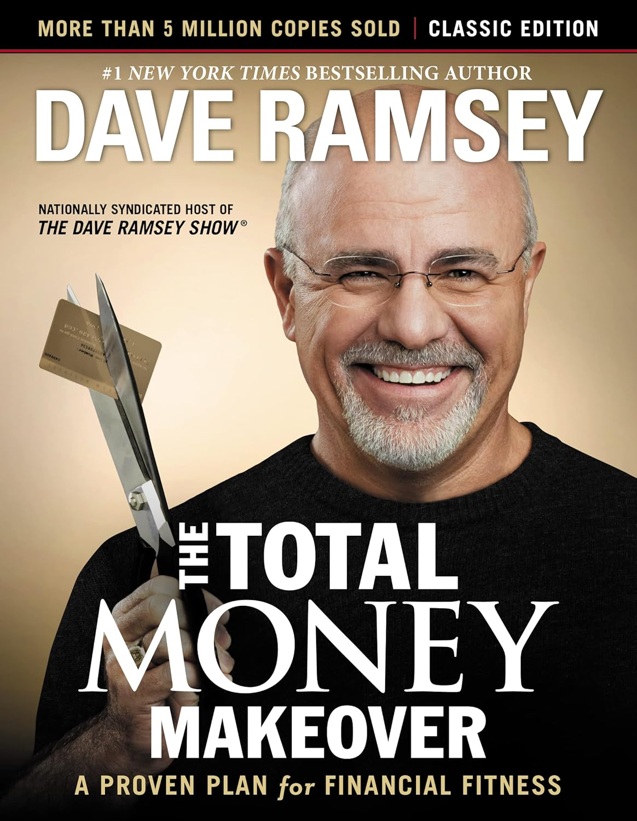
Snapshot: An immensely popular and straighorward program designed to help individuals achieve financial tness, primarily by eliminating debt and building sound money habits through Ramsey's well-known "7 Baby Steps." A newly updated and expanded edition was released in May 2024.
Core Concepts & Key Takeaways: Ramsey's approach heavily emphasizes behavior modication and motivation. The plan is prescriptive, centered around the "7 Baby Steps": 1) Save a $1,000 starter emergency fund. 2) Pay o all debt (except the house) using the "debt snowball" method (aacking smallest debts rst for psychological momentum). 3) Build a fully funded emergency fund covering 3-6 months of expenses. 4) Invest 15% of household income for retirement. 5) Save for children's college funds. 6) Pay o the home mortgage early. 7) Build wealth and give generously. The book aggressively debunks common money myths, promotes diligent budgeting (linking to the EveryDollar app), and provides practical advice for navigating financial challenges. The updated edition specically addresses modern debt traps like Buy Now, Pay Later (BNPL) schemes.
Who Should Read This: This book is specically targeted at individuals and families feeling overwhelmed by debt and seeking a clear, actionable, step-by-step plan to regain control of their finances. It resonates most with those who appreciate a motivational, directive, and sometimes tough-love approach to money management.
Why It's Essential for 2025: With high levels of consumer debt persisting as a major challenge for many households, Ramsey's plan oers a structured and psychologically eective framework for achieving debt freedom and building a foundation of financial stability. While the debt snowball method is sometimes debated by finance purists (compared to the mathematically faster "debt avalanche"), its behavioral benets are widely acknowledged. The updated edition ensures the advice remains relevant to current financial products and pressures facing consumers.
7. Your Money or Your Life by Vicki Robin & Joe Dominguez
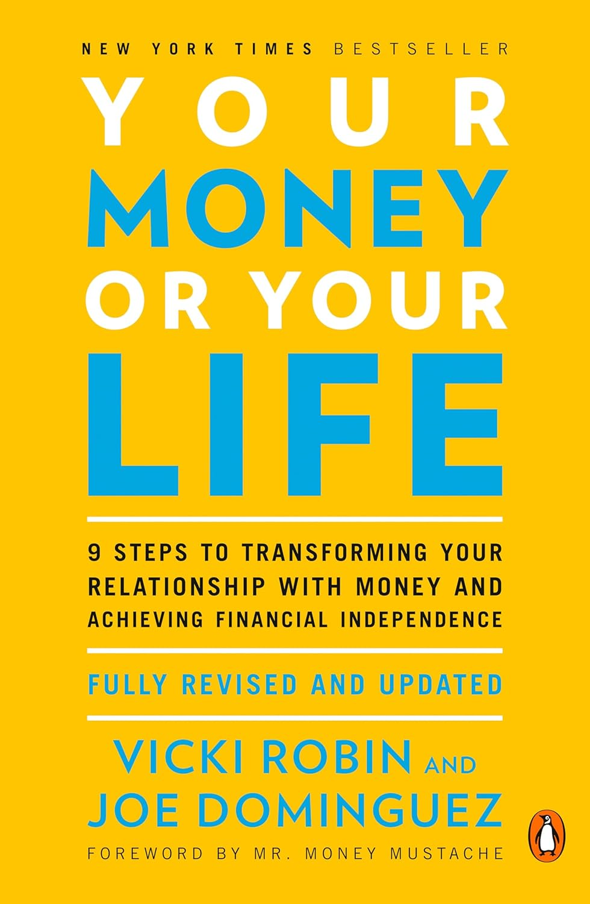
Snapshot: A seminal work, originally published in 1992 and updated, considered a cornerstone text of the Financial Independence, Retire Early (FIRE) movement. It focuses on transforming one's relationship with money by consciously aligning spending with personal values and "life energy".
Core Concepts & Key Takeaways: The book introduces the powerful concept that money is fundamentally equivalent to the "life energy" – the nite time and eort –expended to earn it. It guides readers to calculate their real hourly wage by factoring in all work-related costs (commuting, clothing, stress relief, etc.), oen revealing a much lower gure than initially perceived. A core practice involves meticulously tracking every penny earned and spent, not for restrictive budgeting, but for increased awareness. Spending decisions are then evaluated based on whether the fulllment received is proportional to the life energy sacriced. The ultimate goal is to reach the "crossover point," where income frm investments exceeds monthly expenses, signifying financial independence. The philosophy promotes mindful consumption, frugality, and intentional living over materialism.
Who Should Read This: Anyone interested in achieving financial independence, questioning consumer culture, seeking to align their financial choices with deeper personal values, or exploring the principles behind the FIRE movement.
Why It's Essential for 2025: The book's message strongly resonates with contemporary desires for greater work-life balance, more meaningful lives, sustainable practices, and conscious consumption. It provides a profound philosophical framework for financial decision-making that transcends simple budgeting or investment tactics. By encouraging introspection about what truly adds value to life, it oers a powerful antidote to societal pressures and helps individuals design a financial path aligned with personal fulllment – a highly relevant pursuit in discussions about escaping the "rat race" and building a more intentional future.
8. Thinking, Fast and Slow by Daniel Kahneman
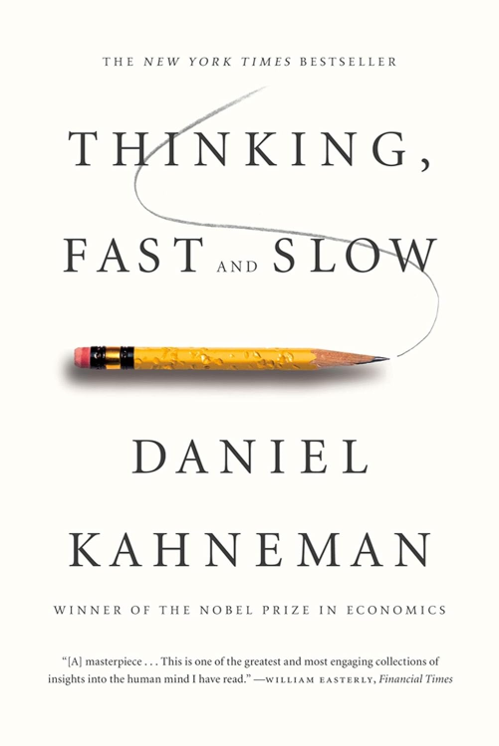
Snapshot: A landmark exploration of human cognition by a Nobel laureate in Economics, detailing the two systems that drive our thinking and the myriad cognitive biases that systematically lead to errors in judgment, particularly in financial and economic decision-making.
Core Concepts & Key Takeaways: Kahneman introduces the dichotomy between System 1 thinking (fast, intuitive, emotional, automatic, and prone to biases) and System 2 thinking (slow, deliberate, logical, eorul, and analytical). The book meticulously unpacks a wide array of cognitive biases and heuristics that inuence our perceptions and choices, oen unconsciously. These include anchoring (relying too heavily on the rst piece of information), loss aversion (feeling the pain of losses more acutely than the pleasure of equivalent gains), conrmation bias (seeking information that conrms pre-existing beliefs), the availability heuristic (overestimating the importance of easily recalled information), overcondence, and framing eects (how information is presented aects choices). Kahneman demonstrates through numerous psychological experiments how these biases impact risk assessment, forecasting, investment decisions, and everyday economic behavior.
Who Should Read This: Essential reading for investors, financial advisors, business leaders, and indeed anyone seeking to improve their critical thinking and decision-making processes by understanding the hidden psychological forces at play.
Why It's Essential for 2025: This book provides the crucial scientic underpinning for why behavioral finance, as explored in books like The Psychology of Money, is so important. In a world saturated with financial news, social media chaer, and marketing designed to trigger impulsive System 1 reactions (like panic selling during market dips or FOMO – fear of missing out – during rallies) , understanding our inherent biases is the critical rst step toward mitigating their impact. Recognizing when System 1 might be leading us astray allows us to consciously engage the more rational System 2 for sounder financial planning and investment choices. The inclusion of a book rooted in cognitive psychology highlights that achieving financial mastery in 2025 is increasingly an interdisciplinary endeavor. The prominence of behavioral economics, validated by Kahneman's Nobel Prize and the popular success of authors like Housel, signies that understanding how we think is now considered as vital as understanding what financial instruments to use. Financial literacy in the modern era implicitly includes psychological literacy.
9. The Algebra of Wealth by Sco
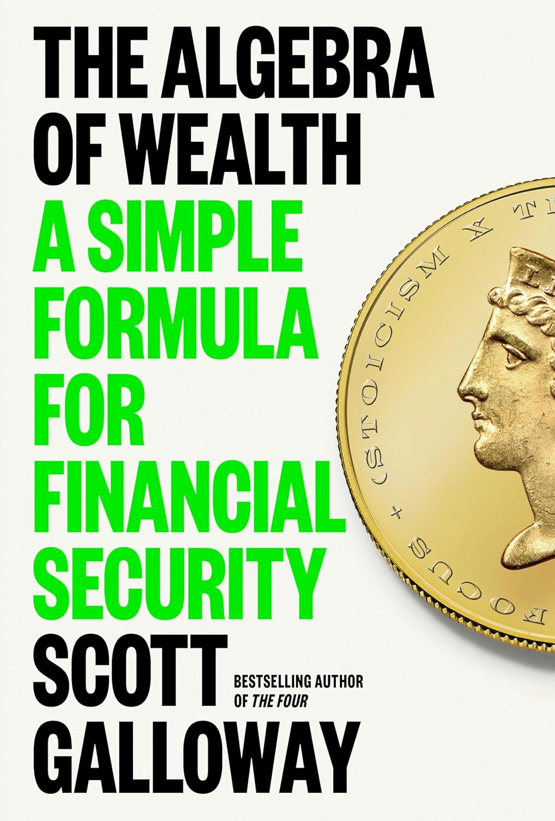
Snapshot: A recent (April 2024) bestseller frm the outspoken NYU Stern professor, entrepreneur, and podcaster, oering a contemporary formula and no-nonsense playbook for building financial security amidst the unique challenges of today's economy.
Core Concepts & Key Takeaways: Galloway presents his formula for wealth: Wealth is equal to Focus + (Stoicism x Time x Diversication).Focus centers on career strategy: identifying and leveraging your talents (rather than just passion), maximizing income potential, and understanding market dynamics. Stoicism involves cultivating character, discipline, and habits to control spending, resist consumerism, and align short-term actions with long-term financial goals. Time emphasizes the critical importance of leveraging compounding through early and consistent saving and investing, recognizing time as a young person's greatest asset. Diversication covers the basic principles of spreading investments across dierent asset classes like stocks, bonds, and real estate. The book also stresses the importance of relationships (especially choosing the right partner) and navigating large economic trends. Galloway oers provocative takes, questioning the automatic ROI of higher education and advocating for skilled trades.
Who Should Read This: Particularly relevant for young adults, recent graduates, and professionals in the early to mid-stages of their careers seeking practical, actionable advice tailored to the current economic realities of inflation, housing shortages, and evolving job markets.
Why It's Essential for 2025: This book directly confronts the specic economic challenges and opportunities facing younger generations. Its pragmatic, oen blunt, advice on career development as the primary engine for income generation provides a crucial foundation for wealth building. The explicit emphasis on 'Focus' (career/income) as a key variable in the wealth equation reects a notable aspect of contemporary personal finance discourse. Unlike many books that assume a certain level of savings capacity, Galloway tackles income generation head-on. This suggests that optimizing one's career path – by following talent, negotiating effectively, and potentially job-hopping strategically – is increasingly viewed as a necessary first step for many, especially those facing economic headwinds like high living costs and inflation. The book's holistic integration of behavioral discipline (Stoicism), career strategy (Focus), and investment fundamentals (Time, Diversication) offers a potent framework for navigating today's interconnected financial and professional landscape.
10. Financial Literacy for All by John Hope Bryant
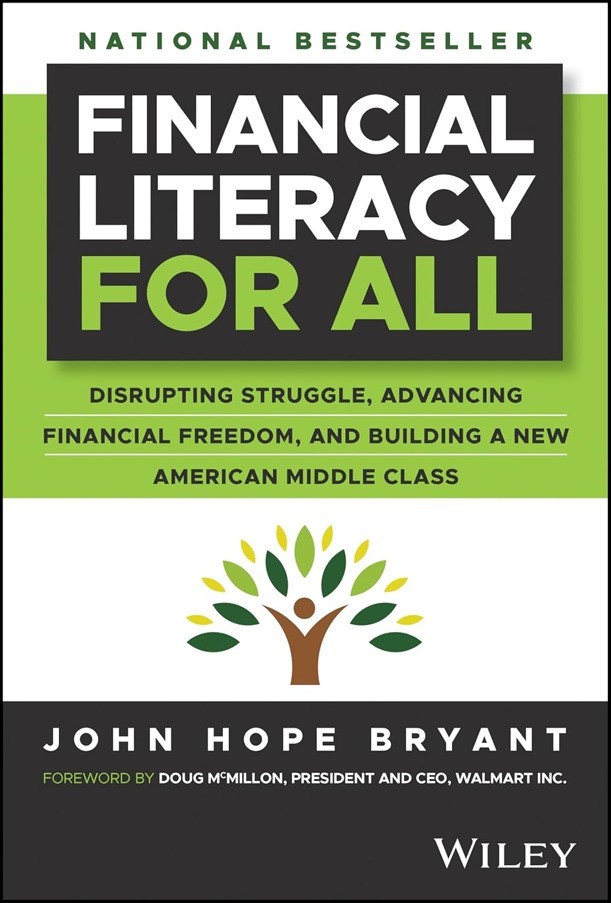
Snapshot: A powerful and accessible call to action (released April 2024), positioning financial literacy not just as a personal skill but as a fundamental tool for individual empowerment, economic justice, and strengthening the American middle class, with a particular focus on historically underserved communities.
Core Concepts & Key Takeaways: Bryant, former Vice-Chairman of the U.S. President's Advisory Council on Financial Literacy, demysties core personal finance topics – budgeting, saving, borrowing responsibly, understanding credit, and investing – using clear, relatable language. The book explores the crucial relationship between work, money, and mindset, encouraging readers to establish a financial mindset conducive to a secure future. It delves into the psychological aspects of money habits and importantly, addresses the systemic barriers and historical context that have hindered wealth creation in marginalized communities (African Americans, Native Americans, immigrants). Bryant advocates passionately for embedding financial education within schools and workplaces, framing financial literacy as a modern civil rights issue essential for disrupting cycles of poverty and advancing financial freedom. The book includes a foreword by Walmart CEO Doug McMillon, highlighting corporate engagement.
Who Should Read This: Bryant intends this book for "everyday Americans". It's highly valuable for working professionals, blue-collar workers, young families, members of underserved communities seeking empowerment, educators looking for resources, and policymakers interested in economic inclusion. It serves as an excellent starting point for beginners seeking foundational knowledge interwoven with important social context.
Why It's Essential for 2025: This book provides crucial context often missing in traditional personal finance literature, highlighting the systemic dimensions of financial well-being and inequality. Its focus on empowerment through education is particularly timely amidst ongoing national conversations about economic disparities, social mobility, and racial wealth gaps. It offers practical first steps toward financial stability while simultaneously presenting a compelling vision for broader economic justice and inclusion. The positive reception 40 of a book explicitly connecting financial literacy to social equity and civil rights signals a signicant broadening of the personal finance conversation. It moves beyond solely individual accumulation to address how financial knowledge—or its absence—impacts entire communities and perpetuates systemic inequalities, reecting a growing societal desire to leverage finance as a tool for empowerment and positive social change.
Choosing Your Next Financial Read: A Quick Guide
With ten excellent options, selecting the right starting point depends on your current financial situation and goals. Consider this quick guide:
If you're struggling with debt: Dave Ramsey's The Total Money Makeover provides a clear, motivational plan for elimination.
If you want to grasp core investing principles: Benjamin Graham's The Intelligent Investor is the timeless classic for value investing, while John Bogle's The Lile Book of Common Sense Investing oers the denitive case for low-cost index funds.
If you need a comprehensive overview of markets and strategies: Burton Malkiel's A Random Walk Down Wall Street covers extensive ground and is updated for modern times.
If you recognize mindset is your biggest hurdle: Morgan Housel's The Psychology of Money offers behavioral insights through stories, while Daniel Kahneman's Thinking, Fast and Slow provides the deep psychological science behind decision-making.
If your goal is financial independence and aligning money with values: Your Money or Your Life by Vicki Robin and Joe Dominguez is the foundational text.
If you're a younger adult navigating career and wealth building today: Sco Galloway's The Algebra of Wealth oers a contemporary, direct playbook.
If you seek a fundamental mindset shift towards asset building: Robert Kiyosaki's Rich Dad Poor Dad delivers that perspective, albeit with caveats.
If you want foundational financial literacy focused on empowerment and social context: John Hope Bryant's Financial Literacy for All is an essential and inspiring read.
Use keywords like "personal finance books for beginners," "best investing books," "financial mindset," "debt reduction plan," or "financial independence books" when searching for more information online to find discussions and reviews tailored to these specific needs.
Conclusion: Invest in Your Knowledge, Invest in Your Future
The ten books highlighted here represent powerful tools for navigating the financial complexities of 2025 and building a more secure future. They offer a blend of timeless wisdom and contemporary insights, covering the spectrum frm practical budgeting and debt elimination to sophisticated investment strategies and the crucial psychology of money. Reading these books is more than just acquiring information; it's an investment in yourself – an investment in the knowledge, strategies, and mindset required for financial well-being.
However, knowledge alone is not enough. As several authors emphasize, true progress comes frm applying these lessons. The real value lies in taking actionable steps, whether it's creating your first budget, automating your savings, making your first informed investment, or simply becoming more conscious of the behavioral biases influencing your financial decisions.
By engaging with these top finance reads, you equip yourself to make beer choices, build resilience against economic uncertainty, and move condently towards your financial goals. Financial education is a continuous journey, and these books provide an exceptional foundation for anyone looking to level up their financial skills in 2025.
Which of these essential finance books will you read first in 2025? Do you have other must-read recommendations for building wealth and improving financial literacy? Share your thoughts in the comments below!.
Works cited
1 The Algebra of Wealth: A Simple Formula for Financial Security - Amazon.com, accessed April 30, 2025,
https://www.amazon.com/Algebra-Wealth-Formula-Financial-Security/dp/0593714024
2. Sco Galloway's The Algebra of Wealth: How the power of time can change young investors' lives - Financial Post, accessed April 30, 2025, https://financialpost.com/wealth/smart-money/sco-galloway-algebra-wealth-po wer-time-change-young-investors-lives
3.18 Must-Read Books For Finance Professionals In 2025 - Forbes, accessed April 30, 2025,
https://www.forbes.com/councils/forbesfinancecouncil/2025/03/26/18-must-read -books-for-finance-professionals-in-2025/
4. Sco Galloway | The Algebra of Wealth: A Simple Formula for Financial Security - NYU Stern, accessed April 30, 2025,
https://www.stern.nyu.edu/experience-stern/faculty-research/algebra-wealth-sim ple-formula-financial-security
5. Personal Finance - NerdWallet, accessed April 30, 2025,
https://www.nerdwallet.com/h/category/personal-finance
6. Smart Money Podcast: The Best Financial Products of 2025 and Investing in Collectibles, accessed April 30, 2025,
https://www.nerdwallet.com/article/finance/smart-money-podcast-the-best-financial-products-of-2025-and-investing-in-collectibles
7. Books on Finance You Recommend? : r/personalfinance - Reddit, accessed April 30, 2025, https://www.reddit.com/r/personalfinance/comments/125yhrz/books_on_finance_ you_recommend/
8. The 5 Best Books for Millennials About Money in 2025, accessed April 30, 2025,
https://illuminc.com/the-5-best-books-for-millennials-about-money/
9. Best Finance Books for 2025 - 365 Financial Analyst, accessed April 30, 2025,
https://365financialanalyst.com/career-advice/best-finance-books/
10. The 17 Best Personal Finance Books In 2025 - The CFO Club, accessed April 30, 2025,
https://thecfoclub.com/leadership/finance-books/
11. The 10 Best Personal Finance Books Of 2022 | Bankrate, accessed April 30, 2025,
https://www.bankrate.com/personal-finance/best-personal-finance-books/
12. 8 Must-Read Personal Finance Books To Grow Your Wealth in 2025 | Nasdaq, accessed April 30, 2025,
https://www.nasdaq.com/articles/8-must-read-personal-finance-books-grow-your-wealth-2025
13. The 45 best nance books to read in 2025 - Pan Macmillan, accessed April 30, 2025,
https://www.panmacmillan.com/blogs/general/best-finance-books
14. 8 Must-Read Personal Finance Books To Grow Your Wealth in 2025 ..., accessed April 30, 2025,
https://www.nasdaq.com/articles/8-must-read-personal-finance-books-2024-fresh-start-2025
15. The Psychology of Money: Timeless lessons on wealth, greed, and happiness: Housel, Morgan: 9780857197689 - Amazon.com, accessed April 30, 2025, https://www.amazon.com/Psychology-Money-Timeless-lessons-happiness/dp/08 57197681
16. 50 Finance Hashtags To Use Right Now - Contentworks Agency, accessed April 30, 2025,
https://contentworks.agency/50-finance-hashtags-to-use-right-now/
17. Any book recommendations for 2025 ? : r/Bogleheads - Reddit, accessed April 30, 2025, https://www.reddit.com/r/Bogleheads/comments/1hs3fne/any_book_recommendations_for_2025/
18. Finance Books - Goodreads, accessed April 30, 2025,
https://www.goodreads.com/genres/finance
19. Popular Finance Books - Goodreads, accessed April 30, 2025,
https://www.goodreads.com/shelf/show/finance
20. Popular Personal Finance Books - Goodreads, accessed April 30, 2025,
https://www.goodreads.com/shelf/show/personal-finance
21. The 22 Most Important Finance Books Ever Wrien - Goodreads, accessed April 30, 2025, https://www.goodreads.com/list/show/46535.The_22_Most_Important_Finance_Books_Ever_Written
22. Amazon Best Sellers: Best Finance, accessed April 30, 2025,
https://www.amazon.com/Best-Sellers-Finance/zgbs/books/2604
23. Top 2025 Personal Finance Books for Success – Payouts.com, accessed April 30, 2025,
https://payouts.com/top-2025-personal-finance-books-for-success/
24. Best financial books 2025 : r/personalfinance - Reddit, accessed April 30, 2025,
https://www.reddit.com/r/personalfinance/comments/1i9dd5f/best_financial_books_2025/
25. Financial Literacy Books We Recommend | Clearview FCU, accessed April 30, 2025,
https://www.clearviewfcu.org/Resources/Learn/Blog/Financial-Literacy-Books-We-Recommend
26. Book Review: Neoliberal Soup for the Fledgling Capitalist Soul -- "The Algebra of Wealth", accessed April 30, 2025,
https://artsfuse.org/296269/book-review-neoliberal-soup-for-the-edgling-capitalist-soul-the-algebra-of-wealth/
27. The "Next Warren Bue" Curse Is Real - Investopedia, accessed April 30, 2025,
https://www.investopedia.com/news/next-warren-bue-curse-real/
28. Gold Falls as Dollar Advances Aer US Reports Drop in Q1 GDP, accessed April 30, 2025,
https://www.delity.com/news/article/investing-ideas/202502121720BANKRATEBANKRATE41802226
29. 7 Best Books on Investing and the Stock Market for Beginners ..., accessed April 30, 2025,
https://www.morningstar.com/personal-finance/7-great-investing-books-beginners
30. The Total Money Makeover – Updated and Expanded Edition - Ramsey Store, accessed April 30, 2025,
https://store.ramseysolutions.com/money/books/the-total-money-makeover-bydave-ramsey/
31. THE ALGEBRA OF WEALTH - Kirkus Reviews, accessed April 30, 2025,
https://www.kirkusreviews.com/book-reviews/sco-galloway/the-algebra-of-wealth/
32. The Algebra of Wealth Summary (Sco Galloway) | Book in 4 Min - Four Minute Books, accessed April 30, 2025,
https://fourminutebooks.com/the-algebra-of-wealth-summary/
33. Book Review: The Algebra of Wealth by Professor Galloway - The Boston Advisor blog, accessed April 30, 2025,
https://www.thebostonadvisor.com/book-review-the-algebra-of-wealth-by-professor-galloway/
34. The Algebra of Wealth: A Simple Formula for Financial Security - Goodreads, accessed April 30, 2025,
https://www.goodreads.com/book/show/150246211-the-algebra-of-wealth
35. The Algebra of Wealth Summary of Key Ideas and Review | Sco Galloway - Blinkist, accessed April 30, 2025,
https://www.blinkist.com/en/books/the-algebra-of-wealth-en
36. The Algebra of Wealth(Sco Galloway) - Book Summary & Notes - Oskar Eggert, accessed April 30, 2025,
https://www.oskareggert.com/the-algebra-of-wealth/
37. Financial Literacy for All by John Hope Bryant - Porchlight Book Company, accessed April 30, 2025,
https://www.porchlightbooks.com/products/financial-literacy-for-all-john-hope-b ryant-9781394209026
38. Empowering Minds and Wallets: A Book Review of "Financial Literacy for All" by John Hope Bryant, accessed April 30, 2025, https://minoritybusinessreview.com/empowering-minds-and-wallets-a-book-review-of-financial-literacy-for-all-by-john-hope-bryant/
39. Financial Literacy for All: Disrupting Struggle, Advancing Financial Freedom, and Building a New American Middle Class by John Hope Bryant | Goodreads, accessed April 30, 2025,
https://www.goodreads.com/book/isbn/9781394209026
40. Financial Literacy for All: Disrupting Struggle, Advancing Financial Freedom, and Building a New American Middle Class (Audible Audio Edition): John Hope Bryant, Jeremy (Midnite) Michael Durm, Ascent Audio: Books - Amazon.com, accessed April 30, 2025,
https://www.amazon.com/Financial-Literacy-All-Disrupting-Advancing/dp/B0D18 RB5X7
41. Financial Literacy for All: Disrupting Struggle, Advancing Financial Freedom, and Building a New American Middle Class by John Hope Bryant, Paperback | Barnes & Noble®, accessed April 30, 2025,
https://www.barnesandnoble.com/w/financial-literacy-for-all-john-hope-bryant/1 144885546
42. Financial Literacy for All: Disrupting Struggle, Advancing Financial Freedom, and Building a New American Middle Class - Amazon.com, accessed April 30, 2025, https://www.amazon.com/Financial-Literacy-All-Alleviate-Struggle/dp/1394209029
43. Financial Literacy for All: Disrupting Struggle, Advancing Financial Freedom, and Building a New American Middle Class - Goodreads, accessed April 30, 2025, https://www.goodreads.com/book/show/211192678-financial-literacy-for-all
44. PDF Summary:Financial Literacy for All, by John Hope Bryant, accessed April 30, 2025,
https://www.shororm.com/pdf/financial-literacy-for-all-pdf-john-hope-bryant
45. Financial Literacy for All by John Hope Bryant: 15 Minute Summary - YouTube,
accessed April 30, 2025,
hps://www.youtube.com/watch?visequaltoENIztBIDM9c
46.Disrupting Struggle - Financial Literacy For All By John Hope Bryant, accessed April 30, 2025,
https://anthonydoty.com/financial-literacy-for-all-by-john-hope-bryant/
47. Top Personal Finance Keywords | Free SEO Keyword List - KeySearch, accessed April 30, 2025,
https://www.keysearch.co/top-keywords/personal-finance-keywords
48. Top 6 SEO Trends in Finance for 2025 | Promodo.com, accessed April 30, 2025,
https://www.promodo.com/blog/6-top-seo-trends-in-finance
49. SEO for Financial Services: The Ultimate Guide to Finance SEO for 2025 - Ninjapromo, accessed April 30, 2025,
https://ninjapromo.io/seo-for-financial-services-a-comprehensive-guide
Sign up for our newsletter to get up-to-date from us